
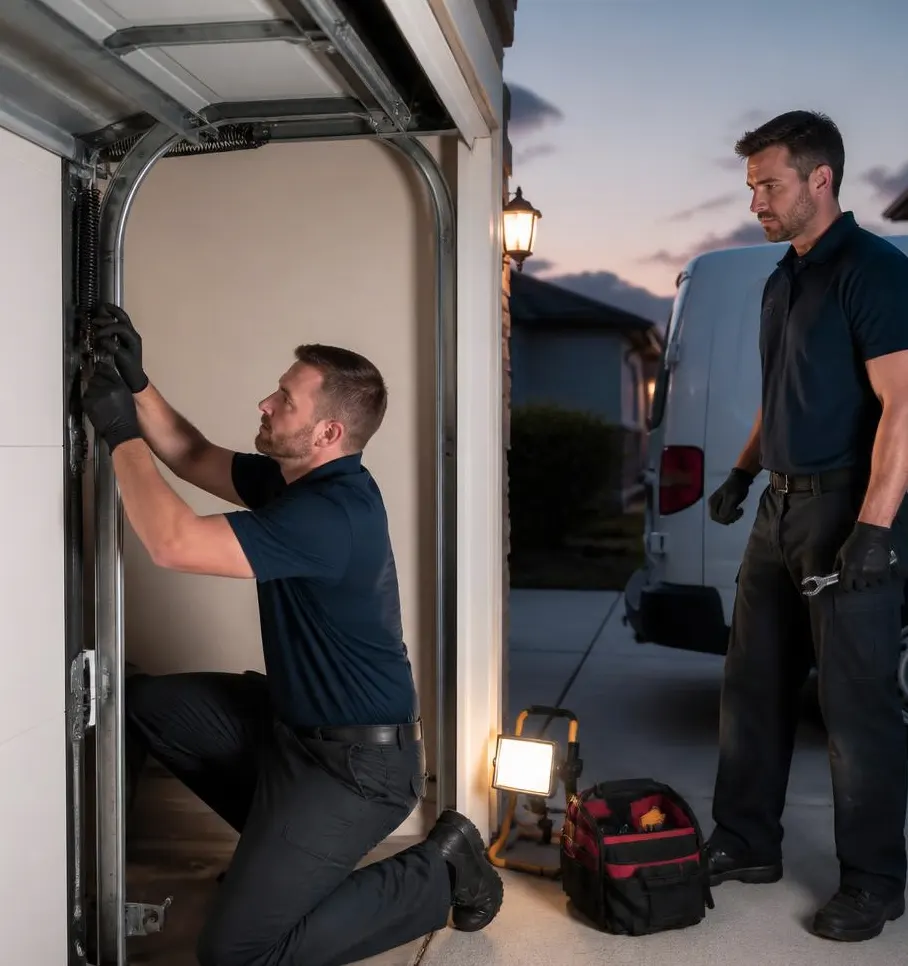
You Hit the Button and the Whole House Shakes
It usually happens the same way: you're backing out early for work, or pulling in after dark, and you hit the remote. Instead of a smooth hum, you get a metallic grinding, a sharp bang, or a chain that slaps and rattles the whole bay. Maybe a window rattles upstairs. Maybe the dog bolts. In older sections of Mt Pleasant where garages sit close to living space, and in newer homes where the garage shares a wall with a bedroom, a loud opener isn't just annoying — it's something you notice every single day.
The good news is that most noisy openers aren't failing, they're just neglected. Heavy humidity, pine sap drifting onto tracks, and salt air near the water all speed up the wear that causes noise. Here's how to work through the fixes in order, from the five-minute jobs to the point where it makes sense to call in a technician.
Tools You'll Need for the DIY Steps
- Socket wrench set and a ratchet with an extension
- Garage door lubricant (silicone or lithium-based spray, not WD-40 or grease)
- Clean rags
- Stepladder
- Flashlight
- Work gloves and safety glasses
Step-by-Step: From Quick Fixes to Bigger Decisions
- Tighten every bolt and bracket. Vibration from months of operation, plus the occasional gust from storm remnants that roll through, works hardware loose over time. With the door closed and the opener unplugged, go along the track brackets, the hinges, and the roller brackets with a socket wrench. Loose hardware is one of the most common causes of banging and rattling, and tightening it costs nothing.
- Lubricate the moving parts. Hinges, rollers, and the opener's chain or screw rail all need a light coat of garage-door-specific lubricant twice a year — more often if your garage sits under pine trees, since sap and pollen gum up moving parts and turn a smooth glide into a squeak. Avoid heavy grease, which just collects grit.
- Inspect and replace worn rollers. Metal rollers are loud by nature and get louder as they wear. Nylon rollers with sealed bearings run much quieter and are a straightforward swap one at a time — never remove more than one roller bracket at once, since the door relies on the others for support while you work.
- Check the opener's mounting and add anti-vibration pads. A motor unit bolted directly to the ceiling joists transmits every vibration into the house frame. Rubber isolation pads between the mounting bracket and the joist absorb a surprising amount of noise for a small part.
- Adjust chain or belt tension. A chain-drive opener with a loose chain will slap against the rail with every cycle. Most openers have a tensioning bolt or nut on the trolley assembly — consult your opener's manual, since over-tightening can strain the motor. If the chain looks rusted or stretched beyond adjustment, especially after a few years near the coast, it's time to replace it rather than keep tensioning it.
- Consider a belt-drive conversion. If you've done all of the above and the opener is still loud — or if the chain-drive unit is more than eight to ten years old — swapping to a belt-drive system is usually the real fix. Belt drives use a reinforced rubber belt instead of a metal chain, which eliminates the metal-on-metal noise almost entirely. Typical national pricing for a belt-drive opener replacement runs in the few-hundred-to-mid-four-figure range depending on horsepower, smart features, and battery backup, though your actual cost will vary with the unit chosen.
Where DIY Ends and a Technician Should Take Over
Tightening hardware, lubricating, and swapping a single roller are all reasonable weekend jobs. Where it gets risky is anything involving the torsion spring, the opener's internal gears, or disconnecting the trolley from a door under tension — those carry real injury risk and are best left alone. If you've worked through the steps above and the noise persists, or if you hear grinding from inside the opener housing itself rather than from the track, that's usually a sign of worn internal gears or a motor nearing the end of its life rather than something lubricant can fix.
When to Call Mt Pleasant Garage Door Repair
If tightening and lubricating only quiets things down temporarily, or the opener is older and you're weighing repair against replacement, that's exactly where our Opener Repair & Installation service comes in — we'll diagnose whether it's a worn gear, a failing motor, or simply time for a belt-drive unit, and walk you through the honest trade-offs instead of upselling a new system you don't need. For garages that haven't had a tune-up in a while, our Garage Door Maintenance visits cover the rollers, hinges, hardware, and lubrication in one trip, which catches most noise problems before they get loud enough to notice.
If your opener is grinding, banging, or keeping the house up at night, give Mt Pleasant Garage Door Repair a call. We serve homes and businesses throughout Mt Pleasant, Charleston, North Charleston, Isle of Palms, Sullivan's Island, Daniel Island, Awendaw, and James Island, and we'll get your door running quiet and right.